What Is Black Basalt and What Is the Application?
Formation of basalt
Basalt, mainly composed of oceanic crust, belongs to basic volcanic rocks. It is the most important component of the Earth's oceanic crust and lunar sea, as well as an important component of the Earth's continental crust and lunar land.
Basalt belongs to magmatic rocks in geological rock classification. The magma emitted by volcanic eruptions has a high temperature and a certain viscosity. During its flow, it carries a large amount of water vapor and bubbles. After cooling, it forms various variant shapes of basalt.
Main ingredients
The main components of basalt are silicon dioxide, aluminum trioxide, iron oxide, calcium oxide, magnesium oxide (with a small amount of potassium oxide and sodium oxide), with the highest content of silicon dioxide, accounting for about 45 to 50%.
Advantages
Durability: Basalt is a dense and hard volcanic rock, making it highly durable. Basalt slabs can withstand heavy loads, resist scratching and chipping, and have excellent long-term structural integrity.
Heat Resistance: Basalt is known for its excellent heat resistance. Basalt slabs can handle high temperatures without warping or deteriorating, making them suitable for applications such as kitchen countertops or fireplaces.
Chemical Resistance: Basalt is generally resistant to chemical corrosion, which makes it a good choice for surfaces that may come into contact with acids, alkalis, or other corrosive substances.
Low Maintenance: Basalt slabs are relatively low maintenance. They are easy to clean and typically require minimal sealing or resealing compared to some other natural stones like marble or limestone.
Versatility: Basalt slabs come in various finishes, including polished, honed, and flamed, allowing for diverse design options. They can be used for countertops, flooring, wall cladding, and even outdoor applications like pavers and pool coping.
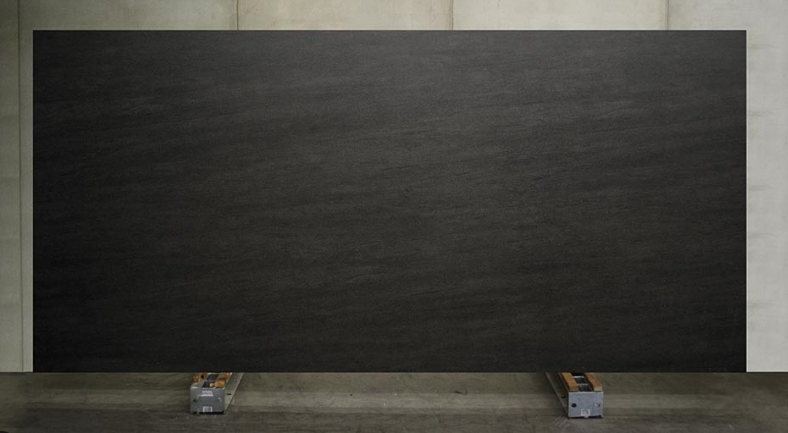
Natural Aesthetics: Basalt has an attractive, natural appearance with a dark gray to black coloration. Its fine-grained texture and consistent color make it appealing for contemporary and modern design styles.
Environmental Benefits: Basalt is an environmentally friendly material because it is abundant and widely available. It does not require extensive processing or mining practices, reducing its environmental impact.
Sound Absorption: Basalt has good sound-absorbing properties, making it suitable for applications where acoustic control is important, such as in interior wall panels or ceiling tiles.
Resistance to Freeze-Thaw Cycles: Basalt is less susceptible to damage from freeze-thaw cycles than some other natural stones, making it suitable for outdoor use in regions with fluctuating temperatures.
Longevity: Basalt is a long-lasting material. When properly installed and maintained, basalt slabs can provide decades of service without significant wear or deterioration.
It's essential to note that while basalt slabs offer these advantages, the specific performance and qualities of basalt can vary depending on its source and the manufacturing process. Therefore, it's advisable to consult with a supplier or expert in natural stone to ensure you choose the right type of basalt for your particular project.
Hardness
The hardness we commonly refer to is Mohs hardness, which is a standard for measuring mineral hardness. It was first proposed by the German mineralogist Friedrich Mohs in 1812. In fact, this hardness value is not an absolute hardness value but a relative scale representing the hardness in a specific order.
Mohs introduced 10 standard minerals for determining the relative hardness of minerals. These minerals are arranged in order from the softest to the hardest on a scale of 1 to 10: talc (1), gypsum (2), calcite (3), fluorite (4), apatite (5), orthoclase feldspar (6), quartz (7), topaz (8), corundum (9), and diamond (10).
The most common minerals in basalt are feldspar, pyroxene, and olivine. Feldspar has a hardness of 6-6.5, pyroxene has a hardness of 5-6, and olivine has a hardness of 6-7. Therefore, the hardness of basalt is generally estimated to be between 5 and 7.
Application
The color of basalt is commonly black, dark brown, or dark green. The texture is dense, and its specific gravity is heavier than that of ordinary granite, limestone, sandstone, and shale. However, some basalts have a particularly large number of pores, which reduces their weight and even allows them to float in water. We call this porous lightweight basalt "pumice". Some artists, based on the porous, wrinkled, and leaky characteristics of pumice, use them to build rockeries in gardens or carve small and exquisite bonsai.
Pumice has many pores and is quite hard. Mixing it with concrete can reduce the weight of the concrete, but it is still very sturdy. It also has characteristics such as sound insulation and heat insulation, making it a material for lightweight concrete in high-rise buildings. Pumice is still a good grinding material, which can be used to grind metal and stone materials. It can also be used as a filter, dryer, catalyst, etc.
Basalt is also a good raw material for producing cast stones. Cast stone is a material made by melting, casting, crystallizing, and annealing basalt. It is harder and more wear-resistant than alloy steel, and more resistant to corrosion than lead and rubber. Basalt also acts as a lubricant in an advanced steel casting process, which can extend the lifespan of the casting film. At the same time, basalt can also be drawn into glass fibers, which have stronger alkali resistance and better high-temperature resistance than ordinary glass fiber cloth. Basalt can also be used as the main raw material for dark glazes such as yellow, red, and black.
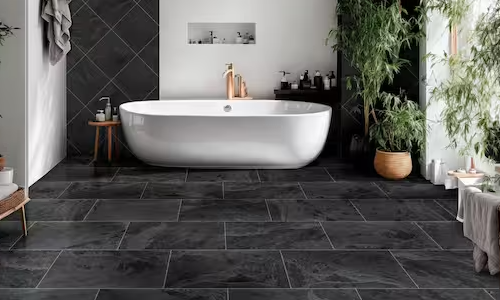
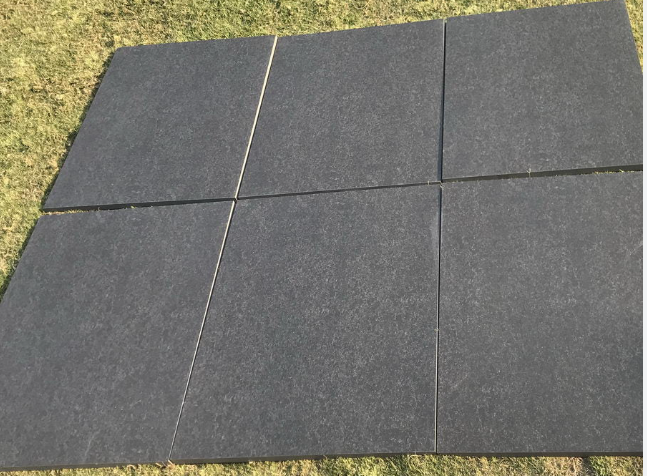
Last but not least, black basalt slab can be used for countertops or paving stone. The basalt is cut into size stones. Thin basalt slabs are cut and polished for use in building finishes, monuments, floor tiles, and other stone materials. Black Basalt Paving is a dark charcoal grey when dry and a solid black colour when wet. All sides are sawn and the top surface is flame textured.
LEESTE has 3 processing bases (Yunfu, Fujian, Yixing), LEESTE is the largest and the most advanced stone processing enterprise. So LEESTE can provide high quality black basalt slab products which are insuranced. Choosing anti slip black basalt slab for your interior design or architectural project can be an excellent decision,. If you have any queation, please contact us immediately!
Are Irregular Shaped Pavers A Good Idea For Driveway?
Why You Should Choose Bianco Carrara Marble Slab?
Related Article