Top Tips For Choosing The Perfect Outdoor Garden Sculpture
2024-02-28
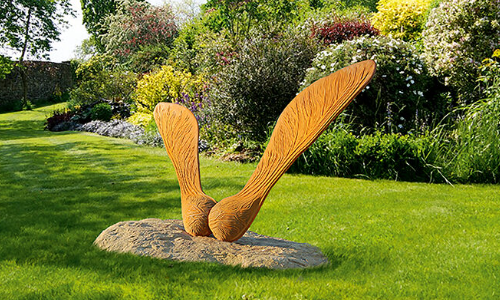
Outdoor garden statues are timeless, artistic elements that grace landscapes with their presence, adding a touch of aesthetic allure and cultural significance. These outdoor garden statues, often crafted from various materials, serve as unique expressions of creativity, reflecting diverse themes, styles, and historical periods. In this exploration, we will delve into the multifaceted world of outdoor garden statues, examining their history, significance, diverse forms, materials, and the impact they have on outdoor spaces.
Background of Outdoor Stone Sculptures
The tradition of marble sculpture boasts a rich history, tracing its roots back to ancient Egypt. Marble, a metamorphic rock renowned for its soft and translucent surface, proved to be an ideal medium for carving. While ancient Egyptians primarily employed various stone materials like limestone, diorite, terra cotta, and granite, they occasionally utilized marble for crafting statues, particularly those depicting figures and pharaohs.
During the early Middle Ages, Italian artists continued the legacy of marble sculpture, often extracting it from quarries or repurposing materials from ancient ruins. At this time, marble remained a relatively costly medium, prompting artists to focus on more naturalistic subjects and less realistic depictions. However, by the Renaissance, artists outside Italy gravitated towards alternative materials like wood, stone, or ivory, reflecting a shift in preferences.
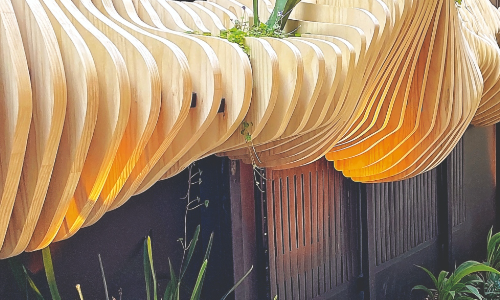
Tips For Choosing A Right Outdoor Garden Sculpture For Your Home
Selecting Your Garden Sculpture
Opt for something you genuinely love. While a sculpture has the potential to significantly enhance the aesthetic appeal of your garden, it is a lasting addition. Avoid succumbing to fleeting trends. Whether your preference leans toward contemporary, realistic, traditional, or abstract sculptures, prioritize choosing something that brings you joy every time you gaze upon it.
Ensuring Compatibility
Consider the style of your garden when selecting a sculpture. An abstract sculpture may seamlessly complement a contemporary garden, while a more formal garden style allows for a versatile choice between traditional and abstract sculptures. If feasible, request a mock up to visualize how a particular piece integrates into your garden setting, aiding in a more informed decision.
Strategic Placement in Your Garden
Larger outdoor garden ornaments can serve as captivating focal points, directing attention to specific areas within the garden. It's essential to assess the perspectives from various angles—front, side, and distant views. Abstract sculptures, with their ability to be appreciated from all sides, make excellent focal points. Conversely, smaller sculptures can create an intimate atmosphere when placed along a path or nestled within a flower bed, providing delightful surprises for guests exploring your garden.
Choosing the Appropriate Material
Sculptures are available in various materials, such as marble, stone, bronze, slate, and even glass, each well suited to specific garden styles and color schemes, particularly in formal or traditional settings. While carved wood exudes a fabulous aesthetic, it demands more care due to weathering. Metals like copper develop a charming patina with time, while rusted steel can complement a more rustic and untamed garden.
Considering Size
The size of the sculpture significantly influences the perceived size of your garden. Even in smaller garden spaces, don't discount larger pieces, as they can introduce drama and become impactful focal points. For instance, a London rooftop terrace adorned with a James Parker slate sphere proves that larger sculptures can be stunning additions to more confined settings.
Illumination
Enhance the allure of your garden by illuminating your sculpture, offering a captivating effect during both daylight and nighttime. Lighting strategies vary, but hidden spotlights focused on the sculpture, possibly from a distance, can create a visually striking nighttime display without revealing the source of illumination. This not only adds a "wow" factor to your garden but also extends its beauty into your living space.
What Are the Elements of Sculpture?
Sculpture and other three dimensional artworks are characterized by a set of essential components that contribute to their overall composition. These fundamental elements encompass line, space, mass or volume, shape, value, color, rhythm or repetition, continuity, emphasis, balance, texture, and proportion. The majority of sculptures incorporate a combination of these elements to varying degrees in order to achieve their artistic expression.
Line: Line is a ubiquitous feature across various art forms, including painting, drawing, and sculpture. It delineates the contours or boundaries of a form, representing the intersection of planes. This may involve the use of linear materials such as wire, string, wood, metal rods, or other elongated substances.
Space: Space refers to the dimensions, areas, or volume within an artwork. It denotes the physical expanse independent of any occupying elements, commonly known as absolute space.
Plane: A plane is a flat or level surface within an artwork. Materials used for planar sculptures encompass foam core, sheet metal, cardboard, plastic sheets, plywood, and more.
Mass or Volume: Mass constitutes a self contained, three dimensional form. It possesses solidity and is entirely enveloped by surrounding space. Volumetric sculpture materials may include blocks of plaster, stone, or wood. Occasionally, "mass" refers to a positive solid, while "volume" refers to the negative, an open space enclosed by material, such as a bowl or vessel.
Shape: Shapes can be positive or negative. Positive shapes in sculpture encompass the entirety of the mass enclosed by its contours. In three dimensional artworks, the visible shape or outer limit of a sculpture's form changes as the viewer's position or angle changes. These outer limits are perceived as shapes that oscillate between the major contours of the artwork. Negative space is an empty area defined by a positive shape, and these positive and negative shapes may be referred to as occupied or unoccupied spaces.
Value: Value pertains to the light and shadows present on the surface of forms. It signifies the amount of light reflected by a sculpture's surface, and this value can be influenced by the addition of color to the sculpture's surface.
Texture: The texture of a sculpture characterizes the surface quality of a form. Textures can range from rough and weathered to smooth, and they are often determined by the materials chosen by the sculptor.
Color: Color constitutes a fundamental element of sculpture, representing the actual hue of the material employed. Classical sculptures from earlier eras, when exhibited today, may seem devoid of color or simply reflect the color of their underlying material. However, many ancient sculptures have undergone color loss over time or have altered in hue due to exposure to the elements and weathering. The Statue of Liberty in New York, initially brown as a copper statue, serves as an illustration, having transformed into a verdant shade over the years.
Contrast and Variety: Contrast and variety entail distinct qualities or characteristics within a form. They contribute to the allure and fascination of an artwork by incorporating diverse shapes, textures, and forms.
Rhythm and Repetition: Repetition generates rhythm within an artwork. Three primary rhythmic techniques include replicating the same form, alternating between two different forms, or sequentially altering a form (such as transitioning from large to small). Jon Barlow Hudson's 'Double Helix: Flowing Balance' exemplifies how sculptors employ rhythm and repetition.
Emphasis: Emphasis bestows prominence upon a specific element in an artistic work, creating a dominant feature or focal point. It serves to establish a pinnacle or climax within the artwork, often manifesting as a dominant motif or design element.
Continuity: Similar to rhythm and repetition, continuity represents an organized movement or rhythm within an artwork, taking the form of repetition, alteration, or progression.
Balance: Balance delineates the order and interrelationship among the various elements of an artwork, establishing equilibrium whether the sculpture is symmetrical or asymmetrical.
Symmetrical Balance: Symmetry signifies visual units that are equivalent, displayed either symmetrically from the center horizontally or vertically.
Asymmetrical Balance: Asymmetry, the antithesis of symmetry, achieves visual balance through diverse visual units. For instance, two or three small shapes on the left of a sculpture may counterbalance a larger form on the right.
Proportion: Proportion gauges how elements within a sculpture compare in terms of size, quantity, and emphasis, reflecting the degree to which each element contributes to the overall composition.
LEESTE is the largest and the most advanced stone processing enterprise. LEESTE can provide high quality custom size custom stone garden ornaments products which are insuranced.
Home Help: Low-Maintenance Landscape Stepping Stones Ideas
Why Granite is a Smarter Choice
Related Article
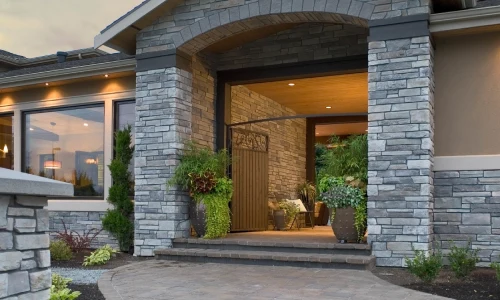
Natural stone and manufactured cultured stone are the two most popular types of stone veneers on the market.
Key Differences Between Cultured Stone And Natural Stone

If you're looking for a unique and striking take on marble tiles, our onyx tiles collection might be just what you need.
What Are Onyx Tiles?